
 " />
In a competitive socialising venue, the bar is the one thing every guest touches on every visit, often several times. Not everyone eats, and not everyone plays every game, but almost everyone buys a drink. So the range behind the bar does a lot of work – for the margin, and for how guests see the whole venue.
Most venues know the bar matters, but far fewer know whether they’ve got the right range on it. Lists tend to grow by addition: a rep’s deal here, a guest request there, and nothing ever comes off. The result is too many lines, slow sellers tying up cash, and a back bar that says very little about the venue. This is how we run a drinks range analysis, stage by stage, with some examples from a recent engagement at a games-led bar.
1. Start with what the till says
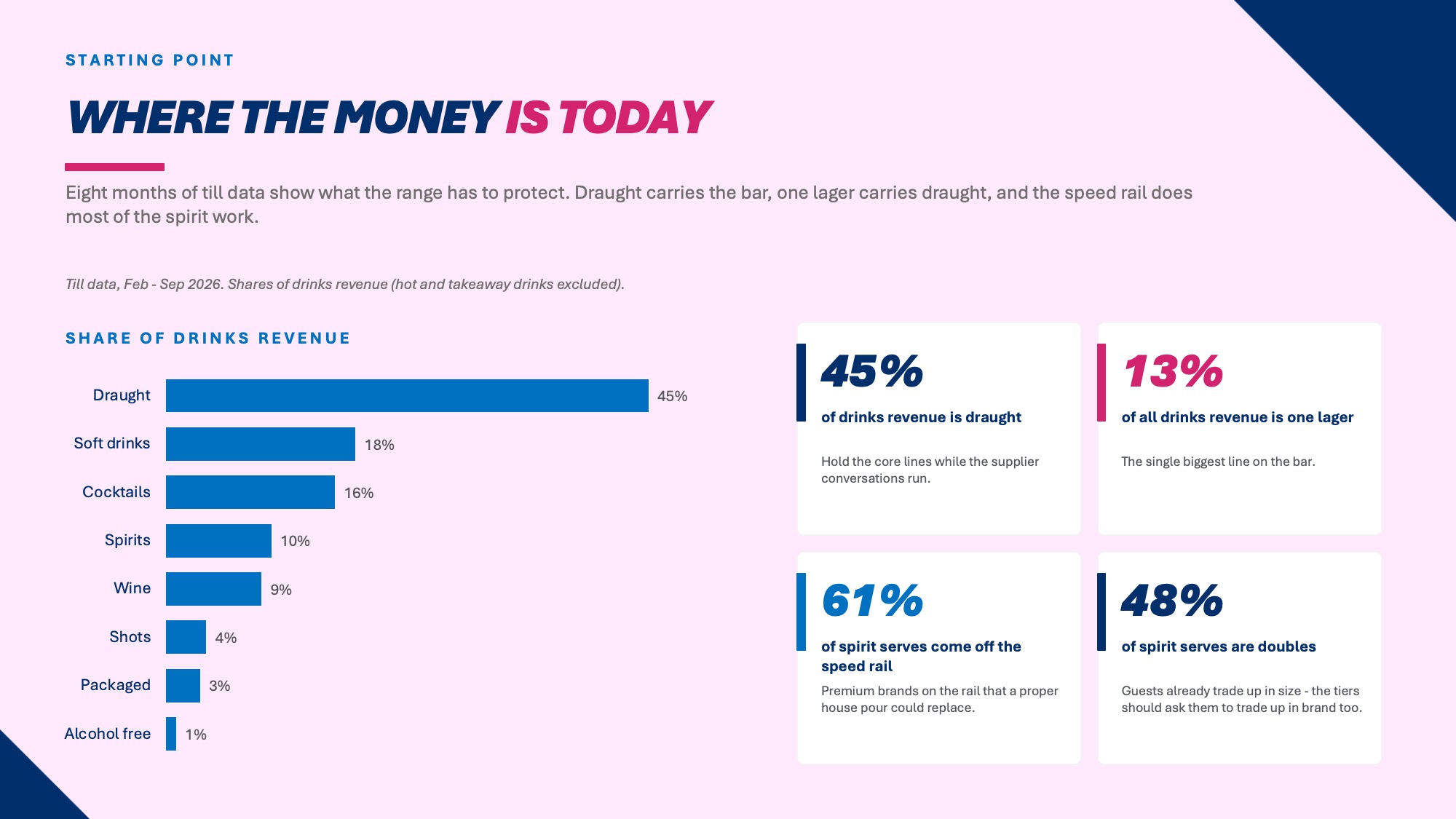
Before anyone tastes anything, we look at the sales and product mix – ideally six months or more of it. On our example site, eight months of till data showed draught carrying nearly half of all drinks revenue, with one lager doing a large share of that on its own. Around six in ten spirit serves came off the speed rail, and almost half were doubles.
That tells you two things. First, what the new range has to protect: the lines that carry the bar stay put (for now!) while anything else is worked out. Second, where the opportunity is: guests were already trading up in size, so the menu should give them a reason to trade up in brand too.
2. Look at the venue, not just the list
If you’ve invested in a venue designed by people who understand design and branding, everything the guest touches should carry that through – and that includes the bar. Guests see the range through the back bar, the fridges, the draught fonts and the menu.
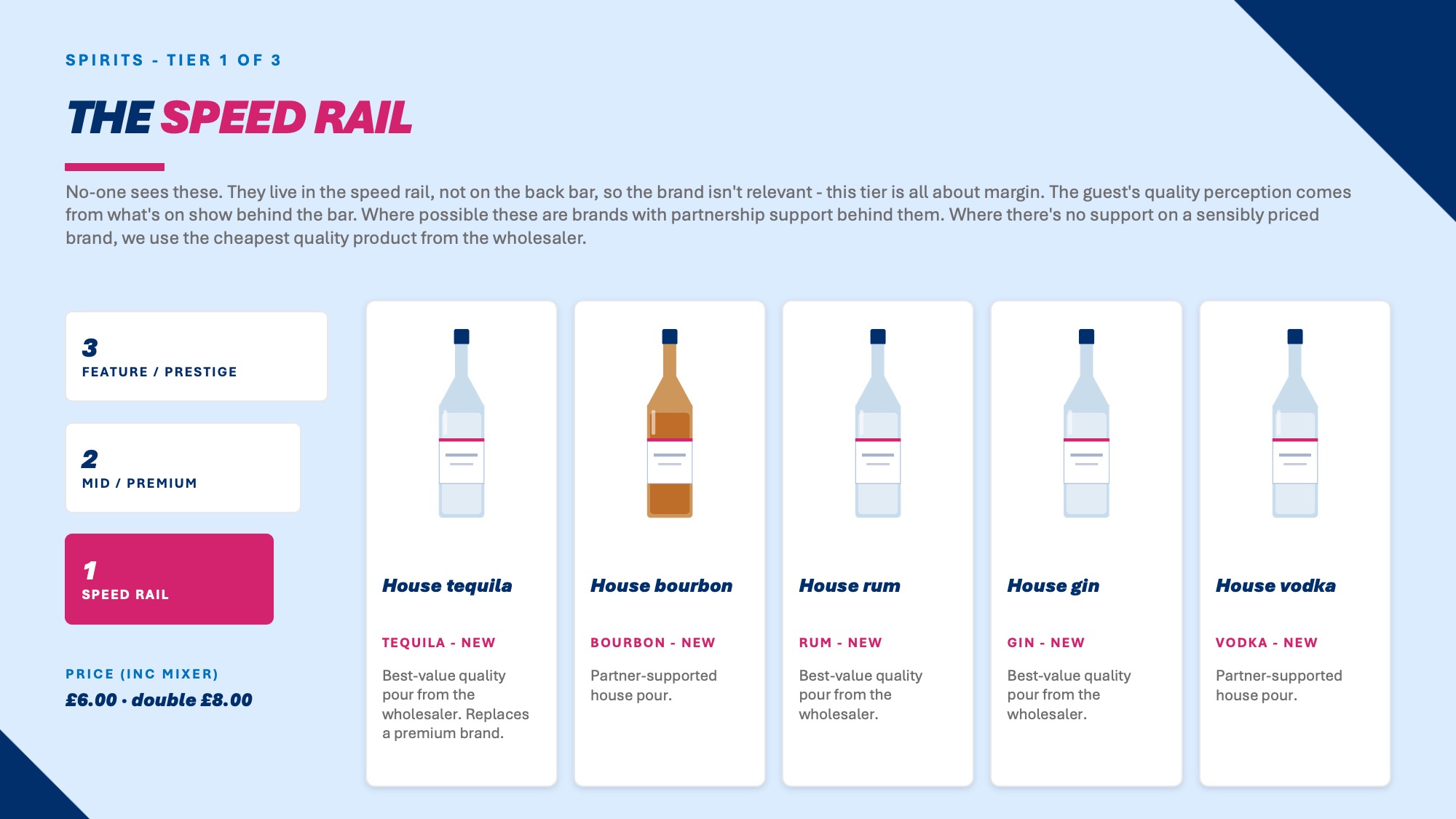
Our example site had a strong 70s Vegas and Americana feel in its design, but the back bar was full of the familiar brands you’d find in any high street bar. The room told one story and the bar told another. The bottles on show set the guest’s view of quality for every drink poured, and here they were doing nothing for the brand the owners had worked hard to build. The new range puts American whiskeys, Mexican tequilas and US craft beer where guests can see them, and keeps the house pours out of sight on the speed rail.
3. Every line earns its place
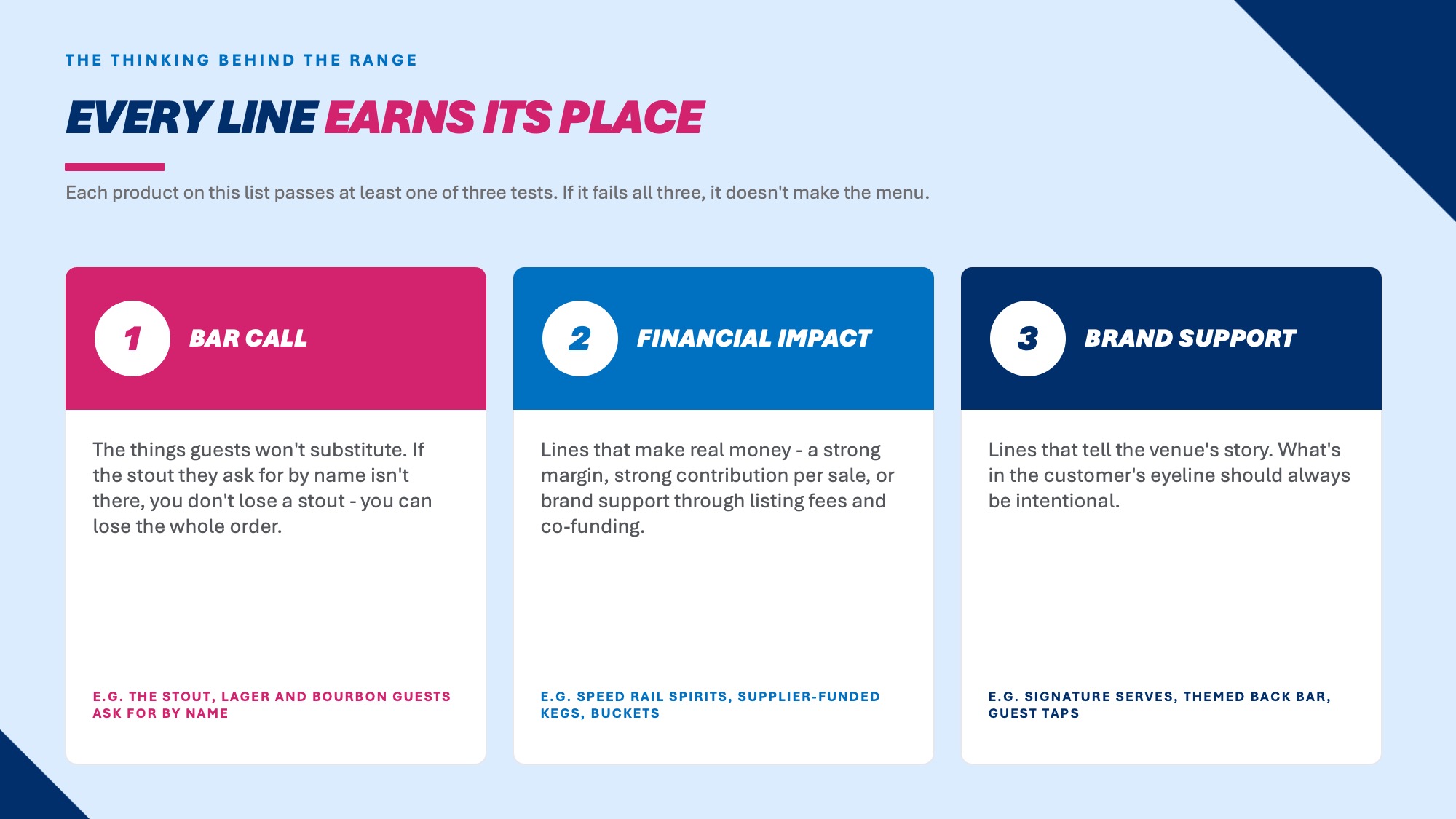
Every product on the recommended list has to pass at least one of three tests. If it fails all three, it doesn’t make the menu.
Bar call: the drinks some guests won’t substitute. If draught Guinness isn’t there, sometimes you don’t just lose a Guinness – you can lose the whole order. On a hundred-line list, only a handful sit here.
Financial impact: lines that make real money, through a strong margin, strong contribution per sale, or brand support through listing fees and co-funding.
Brand support: lines that tell the venue’s story. What’s in the guest’s eyeline should always be intentional. We go into this in more detail in How to create a drinks menu that actually works for your business.
4. Price for the way the bar actually trades
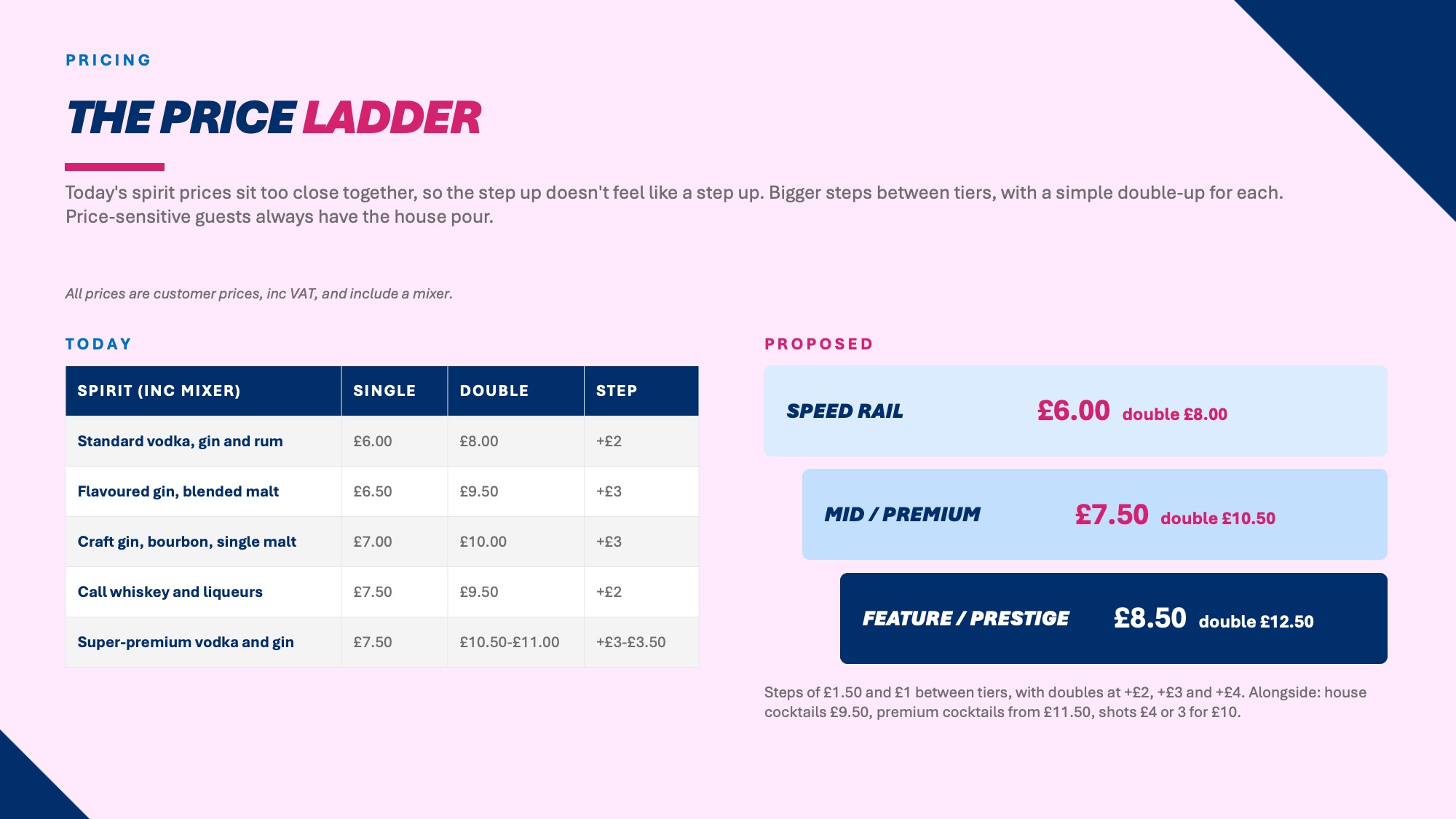
Pricing every line to one target GP gives you strange prices: a cheap postmix and a very expensive pint. We price for a blended margin across the way the bar actually sells. The speed rail and the soda gun carry the margin, bottles of fizz carry the cash, and doubles are priced to be the obvious choice.
That last point is about contribution. A group booked for an hour might only be on site for 90 minutes, which gives you three or four chances to sell them a drink. Margin percentages matter, but you pay the bills with pounds, and pounds come from contribution.
On our example site, today’s spirit prices sat within £1.50 of each other, so stepping up didn’t feel like a step up and the premium bottles weren’t earning their keep. We proposed three clear tiers – house pour, mid and premium, and feature – each with a simple double-up price. Price-sensitive guests always have the house pour.
5. Build in some theatre
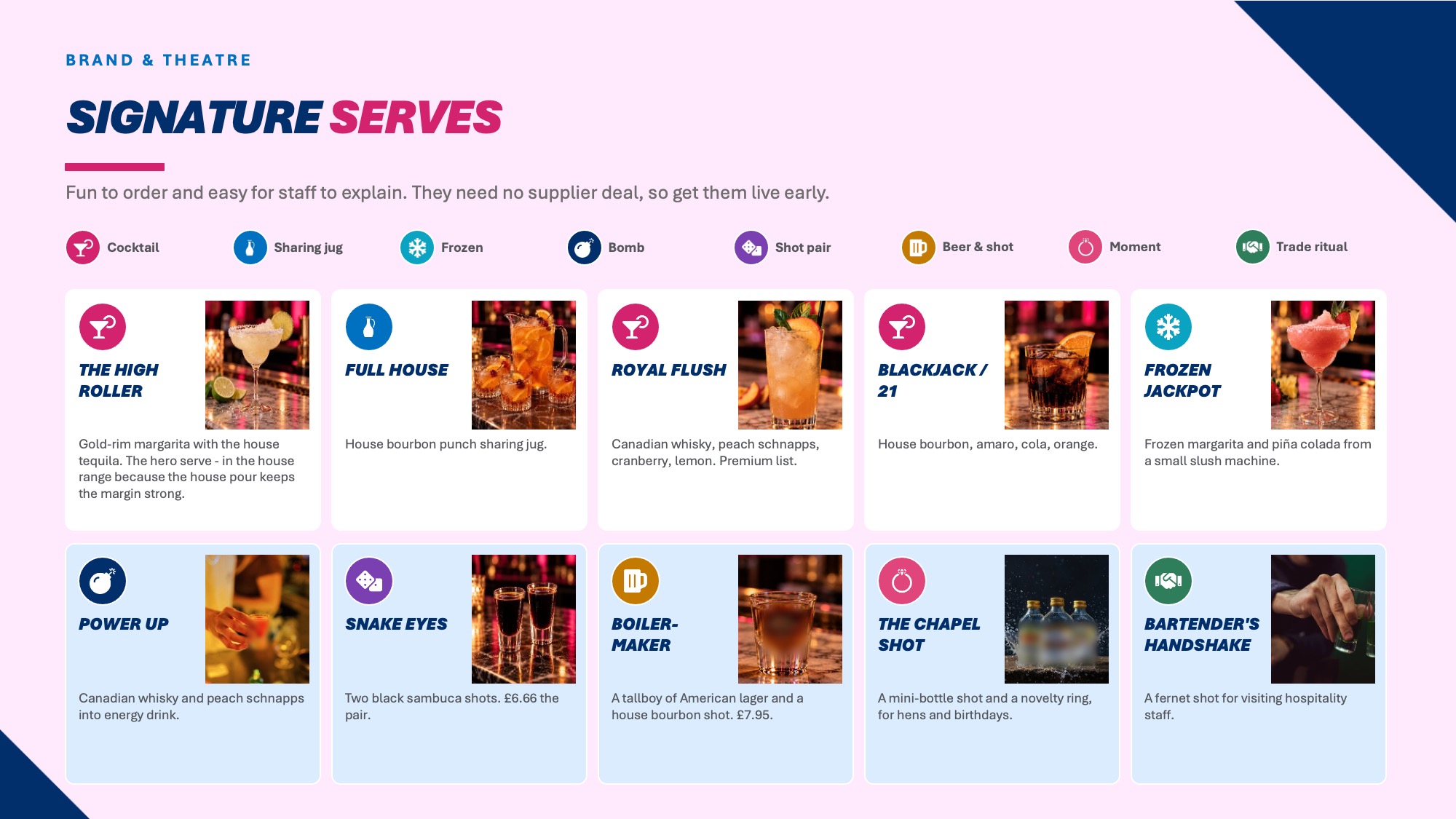
The serves that get photographed, talked about and remembered aren’t always the volume drivers, but they make the bar feel like part of the venue. For our example site that meant a gold-rimmed margarita as the hero serve, a beer and a bourbon shot ordered as one, a sharing jug for groups, and a few shots with a story behind them. Most need no supplier deal – they’re not there to carry a purely financial role, so they can go live early and give the team something to talk about straight away.
6. Match every line to a supplier
A range is only as good as the deal behind it. Each line is matched to its supply route and to any brand-owner support, so the commercial case sits alongside the creative one. Slow-moving feature bottles can even come from a specialist a couple of times a year; the core needs a reliable route and the best terms available. We track where each supplier conversation sits, so the plan reflects what’s actually agreed.
7. A plan you can actually execute
A full range review produces more good ideas than any team can land at once. So we sit down with the operator and agree what happens in the first month, then at three, six and twelve months, shaped around the team, the space behind the bar and the trading calendar. Core lines hold while supplier conversations run. Signature serves and menu changes come first. Training comes before launch, so nothing lands on the bar before the bar is ready for it.
What it can deliver
Done well, a range analysis gives you a stronger blended margin, more spend per head from trade-up and group serves, better use of the brand support available to you, and a bar that looks and feels like the rest of the venue. Just as important, the team knows why every line is there, which is what keeps the range right after we’ve gone.
Want to see what this looks like for your venue?
Working with our partners at Bitesize, we offer Line by Line, our drinks range analysis, starting with a no obligation first stage: a look at your current range, purchasing and bar operation, and a short call to understand what you want the bar to deliver. From there you can choose to move on to a full, actionable plan. Get in touch through our contact form.