

 " />
" />The leisure industry has spent years measuring success through metrics like Spend per Head, Spend per Game and Average Transaction Value. They’re familiar, widely understood, and useful for tracking performance. But they all share the same limitation: they only tell us about the customers who actually walked through the door.
What they don’t tell us is arguably far more important.
This article explores why leisure businesses need a different way of thinking about performance – one that focuses on available capacity, not just consumed capacity. From this, we can also start to understand why the dynamic pricing models used by airlines, hotels and ride-hailing services aren’t as well suited to leisure venues as they first appear.
In Part Two, we’ll explore an alternative approach that optimises not just pricing, but the product itself and how customers perceive its value.
The measurement problem: We only count the people who showed up
Most leisure industry metrics start from the same place: the customer who decided to visit.
Spend per Head is an obvious example. It measures the revenue generated by people who have already chosen to buy. What it ignores completely is the potential revenue that could have been generated by everyone who didn’t.
That might sound like a subtle distinction, but it has significant consequences.
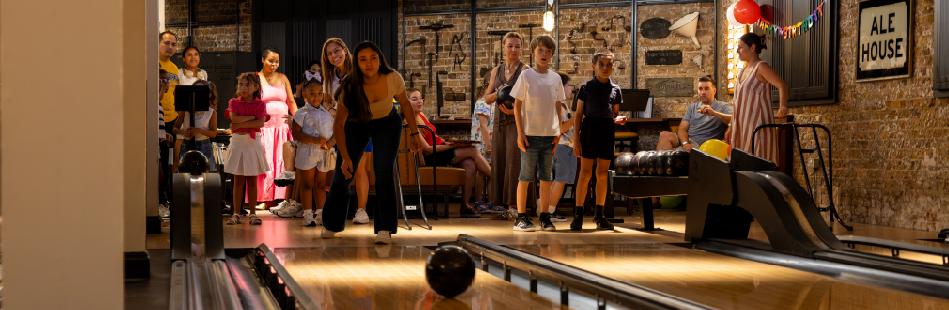
A leisure venue’s real product shouldn’t be defined by transactions. It’s actually access to an experience at a specific place and time. Every bowling lane, golf bay, cinema screen or dart board represents inventory that exists whether someone buys it or not.
When a bowling lane sits empty for four hours on a Tuesday afternoon, that inventory has gone unsold. Yet, because there is no obvious wasted material or direct production cost attached to that empty lane, the industry has traditionally been comfortable overlooking this ‘unselling’.
The result is that most venues focus heavily on maximising the value of customers who arrive, while paying comparatively little attention to the potential value being lost through unused capacity. In the best scenario, venues try to drive off-peak footfall with blunt instrument offers or deals that tend to either devalue the product, confuse customers and staff, or often both.
We measure the people who came. We have never systematically measured the people who could have come — and that is where the value is being lost.
The hotel industry solved a similar problem decades ago through a metric known as RevPAR (Revenue Per Available Room).
The calculation is simple: total room revenue divided by the number of rooms available to sell.
A ten-room hotel generating £1,000 in revenue reports a RevPAR of £100. If only one room sold for £200, the Spend per Room (or Average Daily Rate as hotels call it) figure might appear healthy, but RevPAR immediately highlights the underlying issue. Capacity utilisation, not achieved pricing, is the problem.
Leisure venues have no widely adopted equivalent.
The industry lacks a standard metric that places available inventory at the centre of performance reporting. Correcting that is the first and most important step.
Sector Value: Measuring what you actually have to sell
The core unit of leisure inventory is time.
More specifically, it is the combination of a physical resource – a lane, a bay, a screen, a court – and a defined period in which that resource can be used.
We propose calling this unit a Sector, and the metric derived from it Sector Value.
The principle is straightforward.
Take a trading period and calculate the total number of Sectors available for sale. In simple terms, this is the number of resources multiplied by the number of times each resource can be turned over during that period.
Revenue is then divided by total available Sectors to establish the value generated by each one.
Bowling provides a useful example because the maths is easy to visualise.
A standard game takes roughly ten minutes, meaning a single lane can accommodate six games per hour. A ten-lane venue operating for twelve hours therefore has 720 potential games available each day.
Divide total bowling revenue by those 720 opportunities and you arrive at a Sector Value.
The same principle applies across leisure. Darts, shuffleboard and batting cages all share similar throughput characteristics. Adventure golf courses can be measured by tee times by max customers per time per hour, cinemas by maximum potential screenings and swimming pools and soft play by capacity vs session times
However, the real value emerges when Sector Value is analysed by trading period.
A Saturday evening sector and a Tuesday lunchtime sector are not the same product. Treating them as identical creates averages that are technically correct but commercially unhelpful.
Segmenting performance by weekday and weekend, AM and PM, term time and school holidays, standard trading and bank holidays, or whatever is right for that venue, reveals a much clearer picture of where yield opportunities actually exist.
Once you know what each sector is worth, you can act on it. Before you know, you are guessing.
This is also where another important distinction emerges: heads vs games vs price.
Knowing that Sector Value is low on a Tuesday afternoon is useful. Understanding whether that weakness is caused primarily by low attendance, low games-per-visit or poorly thought-out pricing on the products purchased is infinitely more valuable.
Those are fundamentally different challenges and require different solutions. Treating them as the same problem is one of the reasons many operators struggle to improve off-peak performance.
So, let’s just adopt dynamic pricing then?
When operators identify weak off-peak periods, the instinctive response is often dynamic pricing.
The logic is simple enough. If a Tuesday afternoon sector is worth less than a Saturday evening sector, reduce the price and stimulate demand on the Tuesday, and increase the price and make hay on the Saturday.
It’s the same principle used by airlines, hotels, ride-hailing services and increasingly – much to the chagrin of fans – live events.
The challenge is that leisure operates under a very different set of conditions.
Consider an airline. A plane must depart at the booked time whether there’s two passengers or two hundred on board – particularly if the airline wants to keep that departure slot! If you really need to get from A to B at that time, then there isn’t a host of other options to choose from. The cost of the flight is largely fixed, the break-even sits at a clearly defined point, and every empty seat represents revenue that can never be recovered once the aircraft leaves the gate.
Also think about live events. Say Metallica are playing the o2 Stadium – it’s only happening on a particular day, and there’s a finite amount of resource (tickets) available. Once they’re gone, they’re gone – and they won’t be refreshed until the next tour, which may never happen. The cost of producing the concert is fixed whether anyone goes or not, the promotor knows at what point he’s broken even, and any tickets sold over that is profit.
Dynamic pricing helps optimise a genuine scarcity constraint in these scenarios.
Leisure venues don’t face the same reality.
An empty bowling lane at 2pm on a Tuesday does not trigger a fuel bill. There is no equivalent departure gate after which inventory is permanently lost. More importantly, most leisure venues have an abundance of available inventory throughout much of the trading week, which constantly refreshes day after day, and worse – are often surrounded by other options for entertainment of similar type, delivered at a similar price
That means a pricing model built around scarcity signals has relatively little scarcity to respond to.
But the structural mismatch is only part of the problem.
The bigger issue is customer perception.
Leisure experiences are intangible products. When someone buys a coffee, they have a rough understanding of its production cost – they could go and actually purchase the ingredients themselves. They also have a solid understanding of what that finished product usually costs – it’s a commonly purchased item that is available widely in the local area, and they may even purchase it daily. Those assumptions help anchor their perception of value.
A game of bowling, a trip to the soft play or a round of adventure golf doesn’t benefit from the same anchors.
Over many years, operators have worked hard to establish a relationship between the quality of the experience and the price customers expect to pay. That relationship is surprisingly fragile.
If a game costs £8 on a Saturday and £1 on a Tuesday, many customers won’t simply see a bargain. They’ll start questioning why the same experience costs £8 at all and either become less likely to buy it or increasingly demanding of their experience if they do.
The industry’s concern about price-led devaluation is entirely justified. A simplistic dynamic pricing strategy that relies purely on discounting during quiet periods risks undermining the value of the product itself.
Conversely, if the top end price were to be pushed too high, the customers’ maximum perceived value is exceeded and either the experience can never live up to the price, or the customer simply won’t bother coming.
Dynamic pricing just adjusts the price of the product. What leisure actually needs is a model that adjusts the product itself.
In Part Two, we’ll explore a framework we call Responsive Matrix Pricing; a model designed specifically for leisure businesses and one we believe offers a more commercially effective alternative.